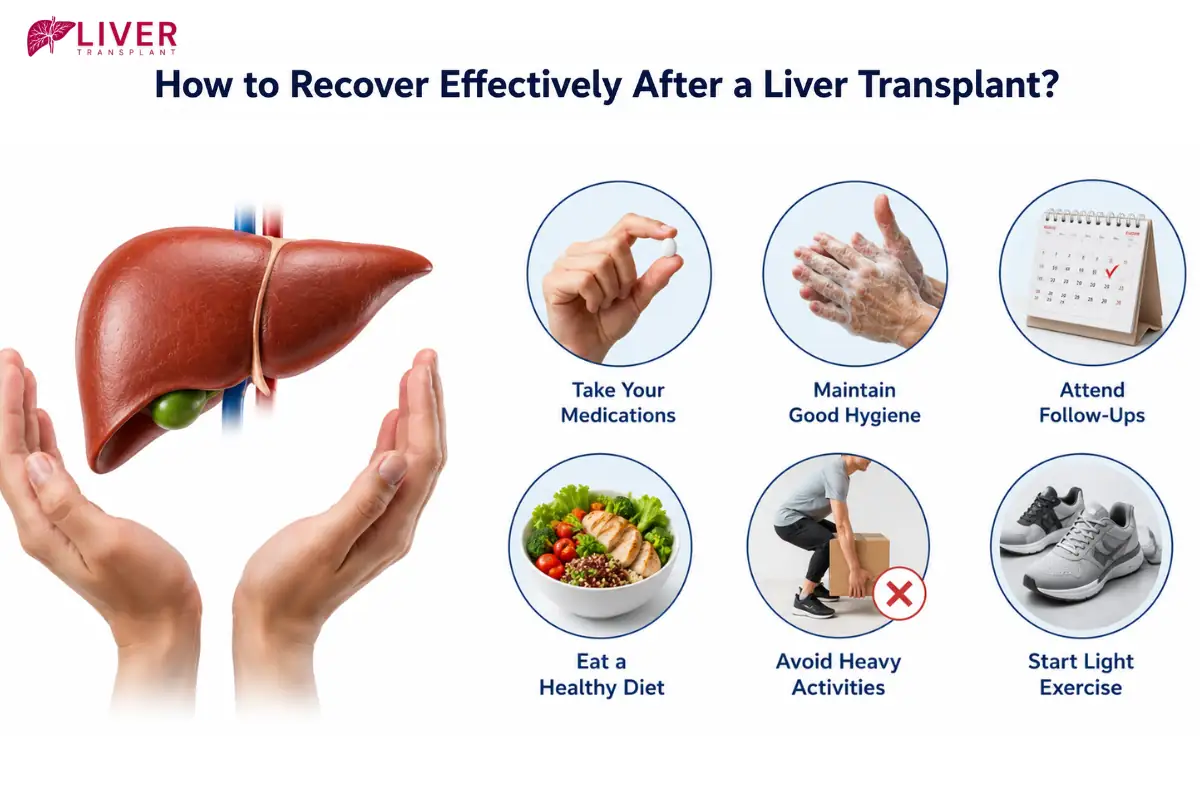
Recovery does not happen on a single schedule — it varies between individuals based on their condition before transplant, the complexity of the surgery, and how their body responds to the new liver. However, a general timeline provides useful orientation.
The First Week — Intensive Monitoring
This week is spent in hospital under close supervision. The new liver's function is assessed multiple times daily through blood tests. The team watches for primary non-function (rare, but serious failure of the graft to work from the start), hepatic artery thrombosis (clotting of the artery supplying the liver — a surgical emergency), bile leak from the newly connected bile duct, and early rejection.
Pain management is active and important — adequate pain control allows deep breathing and early mobilisation, both of which reduce respiratory complications. Most patients are surprised by how much pain they experience after major abdominal surgery, and equally surprised by how rapidly it begins to improve.
Feeding typically begins within 24 to 48 hours of surgery — starting with clear fluids and progressing to soft foods as bowel function returns. Early nutrition is important for liver regeneration and wound healing.
Weeks Two to Four — Hospital Discharge and Early Home Recovery
By the end of the second week, most uncomplicated transplant recipients are ready for discharge, though this varies. The transition home is carefully planned — medication regimens are explained in detail, outpatient appointment schedules are established, and clear instructions about warning signs are provided.
The first weeks at home are a period of significant fatigue. This is entirely normal — the body has been through major surgery and is simultaneously healing, adapting to new medications, and rebuilding physiological reserves that were depleted by pre-transplant liver disease. Most patients sleep a great deal during this period, and the impulse to push through fatigue should be resisted.
Outpatient blood tests during this period are very frequent — sometimes daily or every other day — to monitor liver function, immunosuppressant levels, kidney function, blood counts, and electrolytes. The medication regimen is adjusted based on these results.
Months One to Three — Building Stability
This is the highest-risk period for acute rejection and serious infection. The immune system is navigating a new balance — suppressed enough to tolerate the donor liver, but not so suppressed that the patient is defenceless against infections. The transplant team is working to find each individual patient's optimal immunosuppression level.
Most patients begin to feel meaningfully better during this period — energy returns gradually, appetite improves, and the exhaustion of pre-transplant liver failure lifts. Physical activity gradually increases under guidance.
Outpatient visits remain frequent — typically weekly or fortnightly — and medication doses are often still being adjusted. This is not a time for complacency.
Months Three to Six — Expanding Activity
By three months, most recipients with uncomplicated recoveries are becoming significantly more independent. Many are able to drive again (usually around six to eight weeks post-transplant, subject to medical clearance), return to light work, and resume social activities. Physical fitness improves steadily with consistent gentle exercise.
Immunosuppressant doses are typically being reduced toward long-term maintenance levels during this period. The frequency of outpatient appointments decreases as stability is established.
Six Months to One Year — Approaching New Normal
By six months, most transplant recipients have established a functioning routine — regular medications, periodic blood tests, scheduled clinic appointments, and a lifestyle adapted to their new situation. Many describe this period as one where they begin to feel genuinely well — sometimes better than they have felt in years.
Physical capabilities continue to improve. Many recipients return to full-time work, travel, and most of the activities they enjoyed before their liver disease. The constant vigilance of the early months gives way to a well-established monitoring routine.
Beyond One Year — Long-Term Management
Beyond the first year, the transplant becomes a managed part of life rather than the dominant focus of every day. Annual or biannual clinic visits replace the frequent appointments of the early months. Immunosuppressant regimens are simplified where possible.
Long-term monitoring focuses on preventing and detecting the complications associated with long-term immunosuppression — cardiovascular disease, kidney function, bone density, metabolic syndrome, and malignancy. These are real, ongoing considerations that require consistent medical oversight — not reasons for alarm, but reasons for engagement.