
When a family searches for liver transplant cost, they usually want a straightforward answer: How much will it cost, and can we afford it?
That is a completely understandable concern. A liver transplant is a major medical procedure, and knowing the likely financial commitment helps families plan ahead. However, there is rarely one fixed price that applies to every patient. The final expense can depend on the type of transplant, the patient’s medical condition, donor evaluation when applicable, hospitalisation, medicines, investigations and the care required after surgery. So instead of looking only for the lowest number, it is more helpful to understand what the estimate includes and what level of care it represents.
Why Liver Transplant Cost Can Differ From Patient to Patient
No two transplant journeys are exactly alike. One patient may require extensive evaluation before surgery, while another may need additional medical support or a longer hospital stay during recovery.
Some of the factors that can influence the overall expense include:
- Type of transplant: Living-donor and deceased-donor transplantation involve different processes and may have different associated expenses.
- Patient’s medical condition: A patient with complex health needs may require additional investigations, specialist consultations or closer monitoring.
- Donor evaluation: When living donation is considered, the potential donor also requires appropriate medical assessment and care.
- Hospitalisation: ICU and ward stays form an important part of the treatment cost, and the length of stay can vary.
- Medicines and investigations: Tests, medications and monitoring may contribute to the expense before, during and after transplantation.
- Additional treatment: If an unexpected medical problem occurs, further treatment may increase the final cost.
This is why an online figure should generally be treated as an estimate rather than a guaranteed final bill.
What Does a Liver Transplant Estimate Usually Include?
When a hospital provides an estimated transplant cost, the most important thing is to understand what you are actually being quoted for.
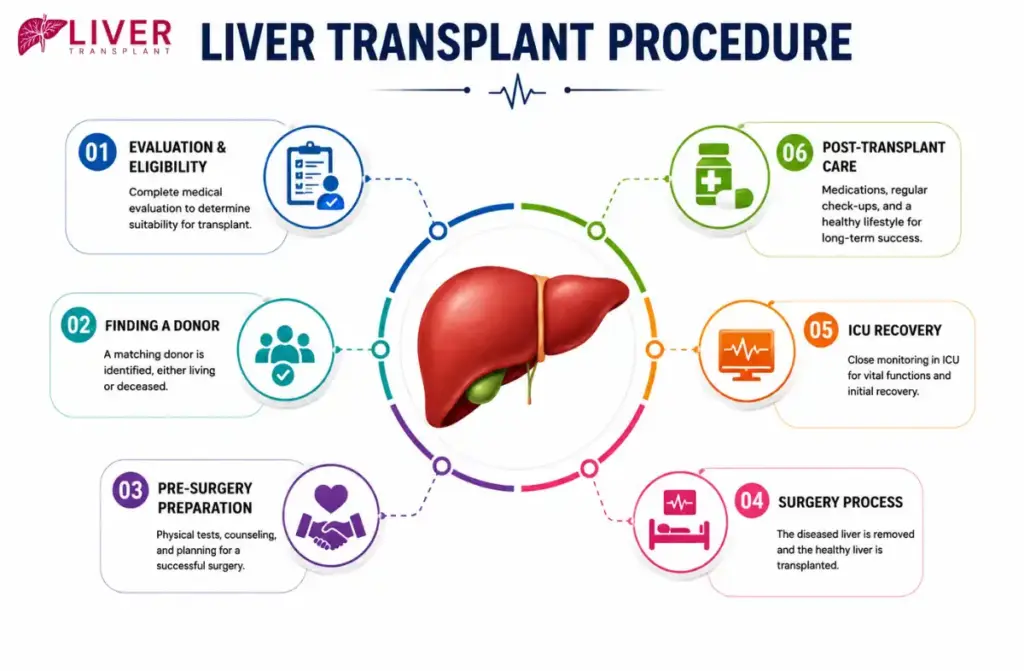
Depending on the centre and the package, the estimate may include several parts of the treatment journey.
| Treatment Component | What It May Cover |
| Pre-transplant evaluation | Medical assessments, laboratory tests and imaging needed before transplantation |
| Donor evaluation | Assessment of a potential living donor when applicable |
| Transplant surgery | Surgical, anaesthesia and operating-room expenses |
| ICU and hospital care | Intensive monitoring and inpatient recovery |
| Immediate post-operative care | Medicines, investigations and medical monitoring during early recovery |
The exact inclusions vary, so families should request a clear written estimate and ask what is billed separately.
The Lowest Estimate May Not Mean the Lowest Overall Cost
When families compare hospitals, it is natural to notice the cheapest estimate first. But with a complex procedure such as liver transplantation, cheaper does not automatically mean better value.
One hospital may quote a lower amount because certain services are excluded or charged separately. Another may provide a higher estimate because more components of care are included.
That is why the better question is not simply:
“Which hospital is cheaper?”
It is: “What am I receiving for this cost?”
A transparent estimate can help you compare hospitals based on both affordability and the quality of support provided.
How to Compare Liver Transplant Costs
If you are considering more than one transplant centre, comparing the estimates side by side can make the differences easier to understand.
| What to Compare | Why It Matters |
| Total estimated cost | Gives you a starting point for financial planning. |
| Package inclusions | Helps you understand what is already covered. |
| Donor-related expenses | Important when a living donor is being considered. |
| ICU and hospitalisation | Longer stays may increase the final expense. |
| Medicines and investigations | Clarifies whether these are included or separately charged. |
| Additional treatment | Helps you understand how unexpected medical needs may affect the bill. |
| Follow-up care | Gives you a realistic picture of expenses after discharge. |
A single number tells you very little. A clear breakdown tells you much more.
The Financial Journey Continues After the Transplant
The hospital bill is only one part of the overall financial picture. After discharge, patients generally need regular follow-up, investigations and medicines. Anti-rejection medicines are particularly important in protecting the transplanted liver and may be required long term.
The exact requirements vary between patients, but families should think about both the initial transplant expense and the ongoing cost of care.
| During the Transplant Journey | After Discharge |
| Evaluation and investigations | Follow-up consultations |
| Surgery and hospitalisation | Blood tests and monitoring |
| ICU and immediate recovery | Medication management |
| Donor care when applicable | Additional investigations when needed |
| Immediate post-operative treatment | Management of complications if they arise |
Planning for both stages can prevent the initial hospital estimate from becoming the only number your family considers.
Living-Donor Liver Transplant: What About the Donor?
When a living donor is involved, there are effectively two people whose care needs to be considered.
The recipient undergoes evaluation and preparation for transplantation, while the potential donor requires separate assessment to determine whether donation is medically appropriate and safe.
Donor-related expenses can vary depending on the hospital and treatment pathway.
Families should therefore ask specifically whether donor evaluation and related hospital expenses are included in the estimate.
The donor’s health should remain just as important as the recipient’s treatment throughout the process.
Can Insurance Help With Liver Transplant Costs?
Insurance can reduce the financial burden for eligible patients, but coverage depends on the individual policy and its terms.
Before proceeding, it is worth confirming:
- Whether transplantation and hospitalisation are covered: Understand what portion of the main treatment is eligible for reimbursement or cashless coverage.
- Whether pre- and post-transplant care is covered: Some investigations and follow-up services may have separate conditions.
- Whether long-term medicines are covered: This can be particularly important because medication may continue well beyond discharge.
- Whether donor expenses are covered: Living-donor arrangements should be clarified separately with the insurer.
If government-supported or other financial assistance programmes are applicable, the hospital’s financial or transplant coordination team may also be able to explain the available options.
Never assume that a policy covering transplantation automatically covers every expense connected with the transplant journey.
What Should You Ask Before Accepting a Cost Estimate?
You do not need a complicated financial checklist.
A few straightforward questions can give your family much better clarity:
- “What exactly is included in the quoted amount?” This helps you understand whether the major stages of treatment are covered.
- “What is not included?” Knowing what may be billed separately can help you prepare for additional expenses.
- “What happens if the patient needs a longer ICU or hospital stay?” Understanding how additional days are charged can prevent surprises later.
- “How are complications handled financially?” While complications cannot always be predicted, the billing approach can be explained in advance.
- “What expenses should we expect after discharge?” This brings follow-up, investigations and long-term medicines into your financial planning.
The purpose is not simply to negotiate the lowest possible price. It is to understand the cost clearly before making a major medical decision.
Cost and Quality Should Be Considered Together
For a family preparing for liver transplantation, affordability is important. But so is appropriate medical care. A sensible decision looks at the transplant team’s expertise, hospital infrastructure, treatment pathway, transparency of the estimate and the family’s ability to manage ongoing care.
If one centre costs less, understand why. If another costs more, understand what the additional cost represents. This approach allows you to compare value rather than price alone.
When a Lower Cost May Not Be the Better Choice
A lower estimate can certainly be attractive, especially when a family is already dealing with significant medical expenses. But saving money at the beginning should not mean compromising on the support required during a complex transplant journey. A more useful comparison considers:
Medical expertise + hospital support + transparent costing + long-term care
rather than simply:
Lowest quoted price
The goal is to find care that is medically appropriate while remaining financially realistic for your family.
Understanding Liver Transplant Cost With Confidence
Liver transplant cost is more than the price of the operation. It reflects the medical care, hospital support and ongoing treatment surrounding the transplant. When comparing estimates, look beyond the lowest number. Understand what is included, what may be charged separately and whether the proposed care meets the patient’s needs. The right decision is not always the cheapest one. It is the one where appropriate care, transparent costs and long-term affordability come together.
Read More: Liver Transplant Surgeon in Chennai