Noticing that the whites of your eyes have turned yellow can be unsettling. You may immediately wonder whether something is wrong with your liver or whether it could be something serious.
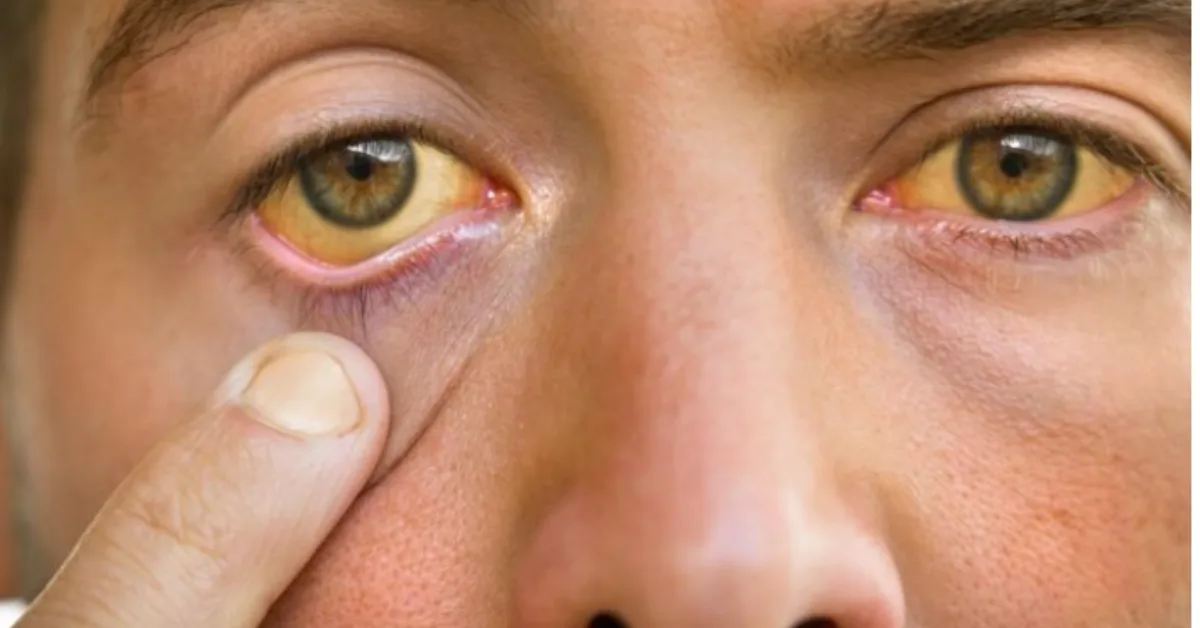
Jaundice in adults is a sign, not a disease by itself. It happens when a substance called bilirubin builds up in the body, causing the skin and whites of the eyes to become yellow. The important part is finding out why the bilirubin is increasing. The cause can range from a temporary or treatable problem to a condition that needs urgent medical attention.
What the Yellow Colour is Trying to Tell You
Bilirubin is produced naturally when old red blood cells are broken down. Normally, the liver processes it and helps remove it from the body through bile.
When this process is disrupted, bilirubin can accumulate in the blood and become visible as jaundice.
- Yellow eyes or skin: This happens when bilirubin levels become high enough to affect the colour of tissues.
- Dark urine: Excess bilirubin can pass into the urine, making it appear darker than usual.
- Pale or clay-coloured stools: If bile is not reaching the intestine normally, stools may lose their usual brown colour.
- Itching: Some conditions causing jaundice can lead to significant or widespread itching.
The key point is that jaundice tells you bilirubin is elevated, but it does not identify the cause. That is why new jaundice in an adult should not simply be assumed to be a liver problem or treated with a home remedy.
The Changes That Can Come Along With Jaundice
Jaundice may be the most visible sign, but the symptoms around it can provide important clues about what is happening.
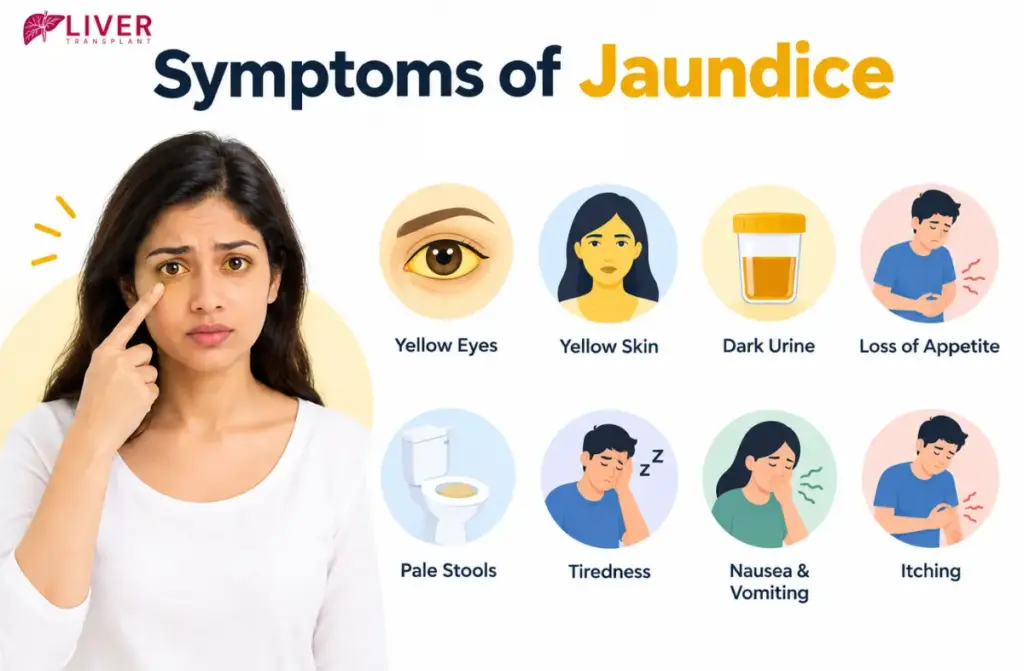
- Unusual tiredness or weakness: This can occur when the underlying problem is affecting the liver or the body more broadly.
- Nausea or reduced appetite: These symptoms can accompany several conditions that cause jaundice.
- Abdominal discomfort: Pain, particularly in the upper right side of the abdomen, may occur with certain liver or gallbladder problems.
- Fever or chills: When jaundice occurs alongside fever, infection or inflammation may need to be considered.
- Confusion or unusual sleepiness: Changes in alertness can be a warning sign of significant liver dysfunction and need prompt medical attention.
You do not need to have all of these symptoms. The combination, severity and speed at which they develop are often more important than any single symptom.
When Jaundice Needs Urgent Attention
The yellowing itself does not always mean an emergency. However, certain symptoms alongside jaundice can signal a more serious problem.
Seek urgent medical attention if jaundice occurs with:
- Severe or worsening abdominal pain
- Fever or chills
- Repeated vomiting
- New confusion or difficulty staying awake
- Vomiting blood or passing black stools
- Significant or unexplained bleeding
- Rapid deterioration or rapidly worsening symptoms
These signs do not automatically mean liver failure, but they can indicate complications involving the liver, gallbladder, bile ducts or other organs.
The important question is not simply “How yellow am I?” but “What else is happening with the jaundice?”
Jaundice Can Start Before, Within or After the Liver
Although jaundice is often associated with liver disease, the problem does not always begin in the liver itself.
| Where the problem occurs | What can happen |
| Before the liver | Excessive breakdown of red blood cells can produce more bilirubin than the body can process |
| Within the liver | Conditions such as hepatitis, liver injury or certain medications can interfere with bilirubin processing |
| After the liver | Gallstones or other bile-duct blockages can prevent bile from flowing normally |
This is why two people with yellow eyes can have completely different underlying conditions. The appearance may be similar, but the treatment can be very different.
Finding the Reason Behind the Jaundice
Once jaundice is identified, the goal is not simply to confirm that bilirubin is high. The real goal is to find out why. A doctor may use a combination of:
- Bilirubin and liver blood tests: These help determine the pattern of abnormality and how the liver and bile system are functioning.
- Blood counts and other blood tests: These can help look for problems such as increased red blood cell breakdown or infection.
- Ultrasound or other imaging: Imaging can help identify gallstones, bile-duct obstruction or structural changes involving the liver and surrounding organs.
- Additional testing when necessary: Depending on your symptoms, medical history and initial results, further tests may be needed to identify the underlying condition.
A careful history is also important. Recent medications, alcohol intake, previous liver problems, infections and other health conditions can all provide useful clues.
Treatment Depends on What is Causing it
There is no single medicine that treats every case of jaundice because jaundice itself is a symptom rather than the underlying disease.
Treatment may involve:
- Treating an infection or inflammation: If an infection or inflammatory condition is responsible, treatment is directed at that specific problem.
- Addressing a bile-duct blockage: Gallstones or other obstructions may require procedures to restore normal bile flow.
- Reviewing medications: If a medicine is contributing to liver injury, a doctor may need to reassess the medication rather than stopping it yourself.
- Managing liver disease: When jaundice results from liver disease, treatment focuses on the underlying condition and preventing further damage.
- Hospital or specialist care: Severe jaundice or significant liver dysfunction may require close monitoring and treatment in hospital.
Once the cause is identified, the treatment becomes much more specific.
What You Should Do While Waiting to Be Evaluated
If you have newly developed jaundice, trying to “flush out” the liver at home is not the answer.
A few sensible steps can help while you arrange medical evaluation:
- Avoid unnecessary alcohol: This is particularly important when the cause of jaundice has not yet been established.
- Don’t start liver-detox products: Herbal remedies and supplements can sometimes affect the liver and may complicate the situation.
- Tell your doctor about every medication and supplement: Even products that seem harmless can be relevant when evaluating abnormal liver function.
- Don’t ignore worsening symptoms: Increasing yellowing, severe pain, confusion, vomiting or bleeding should prompt more urgent care.
Most importantly, do not assume that yellow eyes will disappear simply because you otherwise feel well.
Jaundice Does Not Automatically Mean Liver Failure
Seeing yellow skin or eyes can understandably make someone think, “Is my liver failing?” Not necessarily.
Jaundice can occur because of problems involving red blood cells, the liver itself or the bile ducts. Many of these conditions are treatable. At the same time, jaundice can also occur in serious liver disease, which is why it deserves proper evaluation rather than reassurance based on appearance alone. The presence of jaundice tells you that something needs to be understood, not that the worst-case scenario has already happened.
Conclusion
Jaundice can be frightening to notice, but the yellow colour itself is a signal, not a diagnosis. It can result from problems involving the liver, bile ducts or red blood cells, and the right treatment depends entirely on identifying the underlying cause.
If you notice new yellowing of your eyes or skin, particularly alongside dark urine, pale stools, abdominal pain, fever, worsening weakness or changes in alertness, do not simply wait for it to pass. Getting evaluated early gives you something much more useful than a guess: an understanding of what is causing the change and what needs to be done next.