If you have been diagnosed with fatty liver, you may start questioning everyday habits, including your morning coffee. Is coffee good for fatty liver, or do you need to cut it out completely?
The reassuring answer is that many people with fatty liver can continue drinking coffee. Research has found an association between coffee consumption and better liver outcomes, including a lower risk of advanced liver disease. However, coffee is not a treatment or cure for fatty liver. Its potential benefit is best understood as one small part of an overall healthy lifestyle.
It is also important to remember that fatty liver does not automatically mean severe liver damage. The key concern is whether inflammation or scarring has developed alongside the accumulation of liver fat.
Why Coffee May Be Good for the Liver
Coffee contains caffeine as well as several other biologically active compounds. Researchers believe some of these components may influence metabolic and liver health.
Studies have repeatedly found favourable associations between coffee consumption and liver health:
- Lower risk of advanced liver disease: Regular coffee consumption has been associated with a lower risk of cirrhosis and other serious liver outcomes in observational studies.
- Possible reduction in liver fat: Some research has linked coffee consumption with lower amounts of liver fat. However, this does not prove that coffee itself caused the reduction.
- Potential benefits beyond caffeine: Similar associations have been observed with decaffeinated coffee, suggesting that compounds other than caffeine may contribute to the effects seen in research.
- A habit that can fit easily into daily life: If you already enjoy coffee and tolerate it well, there is generally no need to remove it simply because you have fatty liver.
The important distinction is: Coffee may be associated with better liver health, but it does not “clean,” “flush” or detox the liver.
How Much Coffee Should You Drink?
There is no universally recommended number of cups for everyone with fatty liver.
Some studies have reported favourable liver outcomes among people drinking around 2–3 cups a day, but this should not be interpreted as a prescription.
- Already drink coffee? Moderate daily consumption can generally fit into a healthy lifestyle if you tolerate it well.
- Don’t drink coffee? You do not need to start drinking it simply because you have fatty liver.
- Thinking of increasing your intake? More coffee does not automatically mean greater liver benefits.
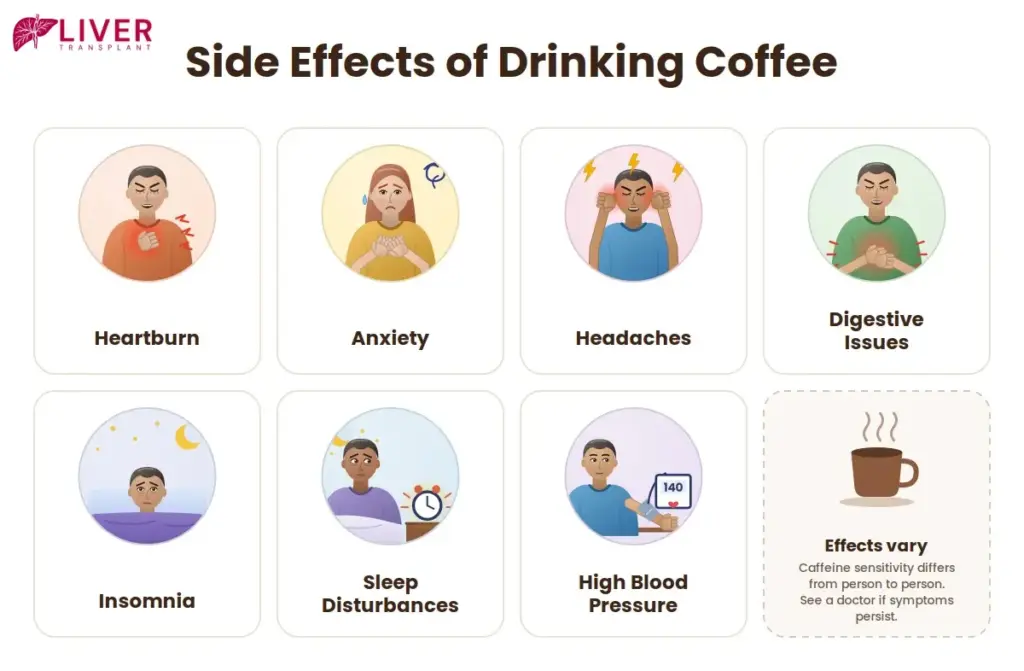
- Sensitive to caffeine? Your sleep, heart rate, anxiety and digestive symptoms matter just as much as the research.
Coffee should fit your lifestyle not become another health rule you feel pressured to follow.
Black Coffee or Coffee With Sugar?
The coffee itself is only part of the equation. What you add to it can change the nutritional value considerably.
| Type of coffee | What to consider |
| Black coffee | Very low in calories and contains no added sugar |
| Coffee with a little milk | Can comfortably fit into a balanced diet |
| Sweetened coffee | Adds sugar and calories that may make weight management harder |
| Flavoured coffee drinks | Often contain added sugars or syrups |
| Large specialty drinks | Can become high in calories, sugar and cream |
This does not mean an occasional sweetened coffee will damage your liver. The bigger point is that a simple cup of coffee is very different from a large, sugar-loaded coffee beverage.
If coffee is part of your everyday routine, choosing little or no added sugar is a simple way to keep it aligned with your overall health goals.
Does Decaf Coffee Help Too?
If caffeine does not suit you, you do not necessarily have to give up coffee.
Research has found favourable liver associations with both caffeinated and decaffeinated coffee, suggesting that caffeine may not be the only component involved.
Decaf may therefore be a comfortable option if regular coffee causes:
- Poor sleep: Caffeine consumed later in the day can interfere with sleep in sensitive people.
- Palpitations or restlessness: Some people are more sensitive to caffeine than others.
- Anxiety or tremors: Reducing caffeine may make these symptoms easier to manage.
- Caffeine-related headaches or digestive discomfort: Switching to decaf may allow you to continue enjoying coffee without the same effects.
If regular coffee suits you, however, there is no need to switch to decaf solely because you have fatty liver.
Coffee Helps, But it is Not the Main Treatment
This is perhaps the most important point to take away.
It is tempting to look for one food or drink that can reverse fatty liver. But fatty liver is often connected with weight, insulin resistance, physical inactivity and other metabolic factors.
That means the bigger gains usually come from addressing those factors:
- Healthy weight management: For people who are overweight, gradual and sustainable weight loss can reduce liver fat and improve metabolic health.
- Regular physical activity: Walking, cycling, swimming, strength training or yoga can all help make your routine more active.
- Balanced nutrition: Your overall eating pattern matters far more than adding one “liver-friendly” food or drink.
- Managing metabolic conditions: Diabetes, high cholesterol and high blood pressure should be appropriately addressed.
- Appropriate medical follow-up: Some people need assessment for liver fibrosis or other signs of progressive disease.
So rather than thinking:
“I drink coffee, so my fatty liver will improve,”
think:
“Coffee can stay in my routine while I work on the habits that have a much bigger influence on my liver health.”
When Coffee May Not Be Right for You
Having fatty liver does not mean you have to drink coffee. If caffeine consistently makes you feel worse, there is no reason to force yourself to drink it for a possible liver benefit.
You may need to reduce your caffeine intake if it causes:
- Significant palpitations
- Sleep problems
- Anxiety or tremors
- Frequent headaches
- Acid reflux or stomach discomfort
If you have another medical condition or have specifically been advised to limit caffeine, follow that advice. Your liver does not need you to tolerate something that makes you feel unwell.
What Matters More Than Your Morning Coffee
It is easy to spend too much time asking whether your coffee is helping or hurting your liver. In reality, one cup is unlikely to determine the course of your fatty liver.
The bigger picture is the pattern of habits you maintain over time:
| Lifestyle factor | Why it matters |
| Regular movement | Supports metabolic health and can help reduce liver fat |
| Healthy weight management | Can improve liver fat and related metabolic risk |
| Balanced nutrition | Supports healthier calorie and nutrient intake |
| Managing diabetes and cholesterol | Addresses important metabolic factors |
| Appropriate alcohol habits | Helps avoid additional liver injury |
| Medical follow-up | Helps identify significant fibrosis or disease progression when needed |
This is why you do not need to obsess over whether your coffee is “good” or “bad.” The habits surrounding your coffee matter far more than the coffee alone.
A Simple Way to Keep Coffee in Your Routine
If you enjoy coffee and tolerate it well, keeping it compatible with a liver-friendly lifestyle does not need to be complicated.
- Keep it simple: Brewed coffee with little or no added sugar is an easy everyday choice.
- Be mindful of extras: Syrups, sugar, cream and large specialty drinks can turn a simple coffee into a calorie-heavy beverage.
- Don’t use coffee as a substitute: Your coffee should complement nutritious meals, adequate sleep and regular physical activity—not replace them.
- Choose what suits you: Regular or decaffeinated coffee can both be reasonable options depending on your caffeine tolerance.
Most importantly, you do not need to find the “perfect” coffee for your liver. The goal is to build a healthy routine that you can maintain without unnecessary restrictions.
Conclusion
A fatty liver diagnosis does not mean your morning coffee has to disappear. For many people, coffee can remain part of a healthy routine, and research suggests a potentially favourable relationship between coffee consumption and liver health.
But there is no magic number of cups and no special type of coffee that will cure fatty liver. What matters much more is the bigger picture: regular movement, balanced nutrition, healthy weight management, metabolic health and appropriate medical follow-up.
So if you enjoy your coffee and it suits you, there may be no reason to feel guilty about that morning cup. Keep the coffee if you enjoy it. Just remember that your liver benefits from the whole lifestyle—not simply what is in your mug.
Read More: Autoimmune Hepatitis Symptoms