Liver failure is rarely recognized from one symptom alone. Often, the body begins giving quieter clues first persistent tiredness, poor appetite, itching, changes in urine or swelling. As liver function becomes more severely impaired, these changes can become more noticeable. Yellowing of the eyes, abdominal swelling, unusual bleeding or confusion may indicate that the liver is struggling to perform essential functions.
Recognizing these changes early matters because not every liver problem has reached liver failure, and some causes can be treated before serious complications develop.
9 Warning Signs You Should Not Ignore
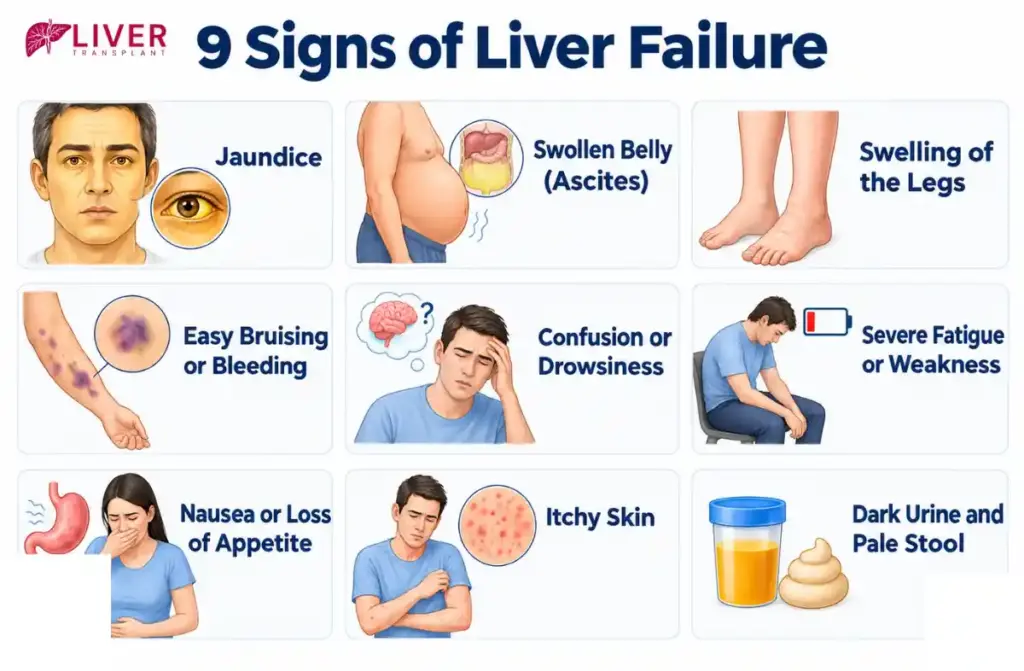
The signs of liver failure can affect the whole body, because the liver helps remove waste, process nutrients, control blood clotting and balance body fluids. Here are the nine signs most often linked to serious liver problems.
1. Jaundice
Yellowing of the skin and the whites of the eyes occurs when bilirubin builds up in the blood because the liver cannot process it effectively. It is one of the most recognisable signs of liver trouble.
2. Swollen Belly (Ascites)
Fluid can collect inside the abdomen, causing fullness, tightness or visible swelling. It is more common in advanced liver disease and needs medical assessment.
3. Swelling of the Legs
Changes in fluid balance can cause swelling in the feet, ankles and legs. It may be more noticeable at the end of the day or after long periods of standing.
4. Easy Bruising or Bleeding
The liver makes proteins that help blood clot. When production falls, you may notice bruises appearing easily, nosebleeds, bleeding gums or bleeding that is hard to stop.
5. Confusion or Drowsiness
When the liver cannot clear toxins effectively, they can affect brain function. This may show up as confusion, poor concentration, changes in sleep pattern or unusual sleepiness.
6. Severe Fatigue or Weakness
Persistent tiredness that does not improve with rest is common in liver disease. Advanced liver problems can affect energy, nutrition and muscle strength.
7. Nausea or Loss of Appetite
Feeling sick, losing interest in food or feeling full quickly can accompany liver dysfunction. Over time, this can contribute to unintended weight loss.
8. Itchy Skin
Changes involving bile can cause widespread itching, sometimes without a visible rash. It can be persistent and troublesome, especially at night.
9. Dark Urine and Pale Stool
Problems with bile processing can darken urine and make stools look pale or clay-coloured. A change in colour that continues is worth getting checked.
Having one of these symptoms does not automatically mean liver failure. Several can occur with other liver conditions or unrelated illnesses, so the overall pattern matters.
When Mild Changes Start Becoming More Concerning
Liver problems can be easy to overlook at first. Tiredness, reduced appetite, nausea or itching may seem unrelated to the liver, but persistent or worsening symptoms deserve attention.
As liver function declines, more significant changes can appear:
| Change | What it may indicate |
| Yellow eyes or skin | Bilirubin is building up in the body |
| Abdominal swelling | Fluid accumulation, known as ascites |
| Leg swelling | Fluid retention associated with advanced liver disease |
| Easy bruising or bleeding | Reduced production of blood-clotting proteins |
| Confusion or excessive sleepiness | Toxins affecting brain function, known as hepatic encephalopathy |
| Dark urine or pale stools | Altered bile processing |
The concern is greater when symptoms are persistent, worsening or appearing together, particularly in someone who already has liver disease.
Some Signs Need Emergency Attention
Certain symptoms can indicate serious complications and should not be watched at home.
Seek emergency medical attention for:
- New confusion, severe drowsiness or difficulty staying awake
- Vomiting blood
- Black, tar-like stools
- Loss of consciousness
- Significant or unexplained bleeding
- Rapidly worsening abdominal swelling
- A sudden deterioration in someone with known liver disease
These symptoms do not prove liver failure, but they can signal potentially dangerous complications that require prompt medical assessment.
Diagnosis Looks Beyond Liver Enzymes
An abnormal liver enzyme result does not automatically mean liver failure. AST and ALT mainly indicate liver-cell injury; they do not directly show how well the liver is performing its essential functions.
Doctors may combine:
| Assessment | What it helps evaluate |
| Bilirubin | Bilirubin processing |
| Albumin | Protein production by the liver |
| PT/INR | Blood-clotting function |
| AST and ALT | Liver-cell injury |
| Kidney function and electrolytes | Effects on other body systems |
| Ultrasound or other imaging | Liver structure and complications |
| Clinical examination | Jaundice, swelling and mental changes |
Additional tests may be needed to identify the underlying problem. Liver failure is therefore assessed from the complete clinical picture, not from one blood test.
Treatment Depends on the Extent of Liver Damage
There is no single treatment for liver failure. Management depends on the cause, severity, whether the condition is acute or chronic and how much liver function remains.
Treatment may include:
- Treating the underlying condition: Specific treatment may be available depending on what caused the liver damage.
- Managing complications: Fluid buildup, bleeding, hepatic encephalopathy and infections may require targeted treatment.
- Supportive care: Severe liver dysfunction may require hospital monitoring and treatment to support other affected organs.
- Liver transplantation: Advanced, irreversible liver failure may require evaluation for transplantation.
Some forms of liver injury can improve when identified and treated early, which is why timely evaluation matters.
Liver Disease Does Not Always Mean Liver Failure
The terms can sound similar, but they describe different levels of liver problems.
| Liver disease | Liver failure |
| Broad term covering many liver conditions | Severe loss of liver function |
| May cause few or no symptoms | More likely to cause serious complications |
| Can sometimes be treated or controlled | Can become life-threatening |
| Liver may still perform many functions | Essential liver functions become severely impaired |
Having liver disease does not automatically mean that the liver is failing. Early assessment can help determine how much damage is present and whether progression can be slowed or prevented.
When it is Time to Get Your Liver Checked
You do not need to wait for severe symptoms before seeking medical advice.
Consider getting evaluated if you notice:
- New yellowing of the eyes or skin
- Persistent weakness or loss of appetite
- Unexplained weight loss
- Increasing abdominal or leg swelling
- Easy bruising or unexplained bleeding
- Dark urine or pale stools
- New confusion or unusual sleepiness
- Worsening symptoms if you already have liver disease
The liver can compensate for damage for a long time, so feeling relatively well does not always mean that liver function is normal.
Conclusion
Liver failure does not always begin with a dramatic symptom. It may start with changes that seem ordinary tiredness, poor appetite, itching or swelling before progressing to jaundice, bleeding problems, fluid buildup or changes in alertness.
The important thing is not to diagnose liver failure from a symptom alone. Persistent or worsening changes should be evaluated, particularly if liver disease is already known.
And when symptoms such as vomiting blood, black stools, severe confusion, loss of consciousness or rapidly worsening swelling appear, do not wait for them to pass seek urgent medical care.