Acute Liver Failure

Most liver diseases develop slowly. Cirrhosis takes decades. Fatty liver disease builds quietly over years. Hepatitis C can be present for twenty years without producing a single obvious symptom. The liver is remarkably patient it absorbs injury, compensates, and keeps working long past the point where most organs would have given up.

Acute liver failure is different. It is sudden, it is severe, and it is one of the most serious medical emergencies in existence. A liver that was completely healthy can fail within days. A young person with no prior liver disease whatsoever can go from feeling mildly unwell to needing a liver transplant within a week. Without urgent specialist care and in some cases, without a transplant acute liver failure is fatal.

But here is what is equally important to know: acute liver failure, when treated quickly at the right centre, has a survival rate that has improved dramatically over recent decades. Many patients particularly those whose underlying cause can be treated directly recover completely with a liver that returns to full normal function. The outcome depends enormously on how fast the condition is recognised and how quickly appropriate care begins.

This guide explains what acute liver failure is, what causes it, how it is recognised, how it is treated, and what can be done to prevent it. Whether you are a patient, a family member, or simply someone who wants to understand this condition, clear information is the starting point for everything that follows.

What is Acute Liver Failure?

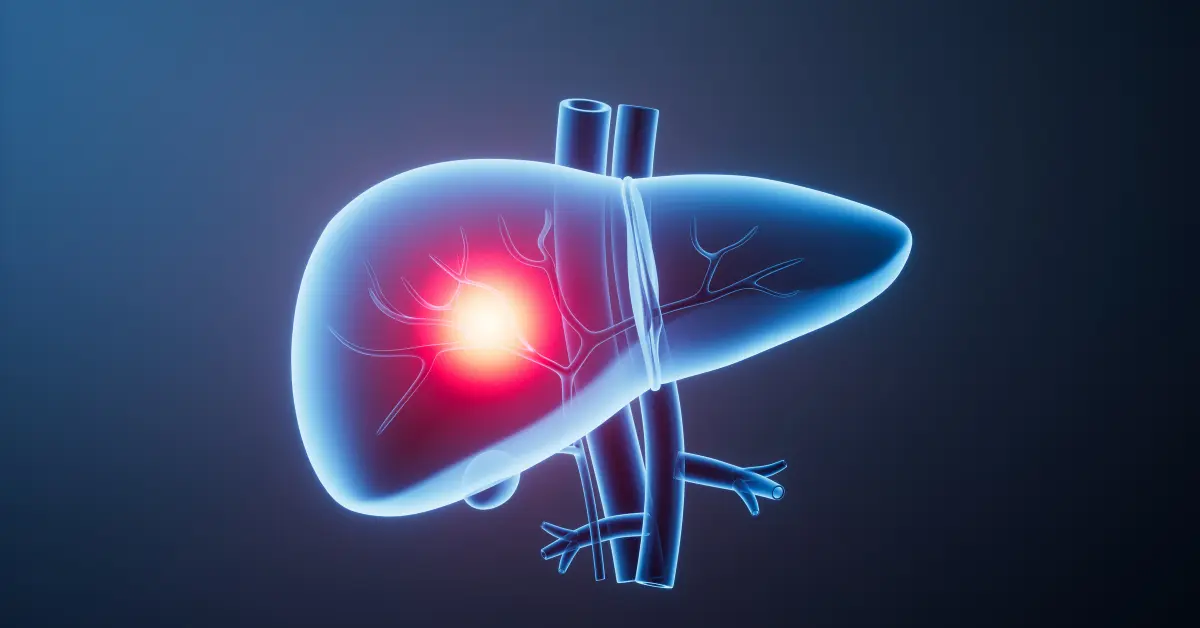
Acute liver failure sometimes called fulminant hepatic failure is a rapid, severe deterioration of liver function in a person who had no pre-existing liver disease. The key word here is acute. This is not end-stage cirrhosis that has gradually worsened over years. It is the sudden collapse of a previously healthy liver happening over days to weeks in someone whose liver was working normally beforehand.

The medical definition is specific: acute liver failure occurs when the liver loses its ability to function to the degree that it can no longer maintain coagulation the body's ability to form blood clots and when this is accompanied by encephalopathy altered mental function caused by toxin accumulation. Both of these features must be present in a person without pre-existing liver disease for the condition to be classified as acute liver failure.

What makes acute liver failure so dangerous is the speed at which it progresses. The liver performs hundreds of essential functions every day filtering toxins, producing clotting proteins, regulating blood sugar, processing ammonia, synthesising albumin. When the liver fails acutely, all of these functions collapse simultaneously. Toxins flood the bloodstream. Blood loses its ability to clot. The brain becomes impaired. The kidneys and other organs begin to fail in cascade. The whole body enters a state of crisis fast.

Yet the liver also has a remarkable property that is uniquely relevant to acute failure: it can regenerate. Unlike most organs, a liver that has been acutely damaged as opposed to chronically scarred retains the potential to fully regenerate if the underlying cause is removed and the patient can be kept alive long enough for that regeneration to occur. This is why the timing of treatment and the decision about liver transplantation are so critical and so complex in this condition.

What Causes Acute Liver Failure?

The causes of acute liver failure vary considerably between countries and populations, but the principle is always the same — something overwhelms the liver's capacity so rapidly that it cannot recover on its own.

Paracetamol (acetaminophen) overdose is the most common cause of acute liver failure in the United Kingdom, United States, and most Western countries. Paracetamol is safe at therapeutic doses — the liver processes it efficiently through normal metabolic pathways. But when taken in excess — whether intentionally in a self-harm context or accidentally through taking multiple products containing paracetamol simultaneously — the liver's normal processing pathway becomes saturated. A toxic metabolite called NAPQI accumulates, directly destroying liver cells in large numbers within hours. The damage can be catastrophic even with doses that are only modestly above the recommended maximum, particularly in people who drink alcohol regularly, are malnourished, or are taking certain other medications that alter paracetamol metabolism.

Viral hepatitis remains a major cause globally — particularly in parts of Asia, Africa, and the developing world. Hepatitis A and hepatitis E viruses occasionally cause acute liver failure, particularly in pregnant women (hepatitis E) and in older adults or those with underlying liver disease (hepatitis A). Hepatitis B can cause acute liver failure through two mechanisms — primary acute infection in adults, and reactivation of chronic infection in patients who receive immunosuppressive treatments. Herpes simplex virus hepatitis is a rare but life-threatening cause that is particularly important to recognise because it responds to specific antiviral treatment.

Drug-induced liver injury (DILI) from prescription medications, over-the-counter drugs, and herbal supplements is a significant and underappreciated cause. Antituberculosis drugs — particularly isoniazid — are among the most important prescription causes. Antibiotics including amoxicillin-clavulanate, fluoroquinolones, and nitrofurantoin have been implicated. Anti-epileptic drugs including valproate and phenytoin are recognised causes. Herbal and dietary supplements — including traditional medicines, weight loss products, and bodybuilding supplements — are a rapidly growing cause of drug-induced acute liver failure and are consistently underreported because patients often do not mention supplements to their doctors or do not consider them to be medications.

Autoimmune hepatitis can present acutely — sometimes as the very first manifestation of the disease, without any prior history of liver problems. An aggressive immune attack on liver cells can cause rapid, severe liver damage in previously well individuals.

Ischaemic hepatitis — sometimes called shock liver — occurs when the liver is suddenly deprived of its blood supply, most commonly during episodes of severe cardiac failure, cardiac arrest, or profound hypotension from any cause. The liver is exquisitely sensitive to oxygen deprivation, and even a brief period of significantly reduced blood flow can cause massive liver cell death.

Wilson's disease — a genetic disorder of copper metabolism — can present acutely in young people, typically adolescents and young adults, with a dramatic presentation that includes acute liver failure combined with haemolytic anaemia. This is one of the most important diagnoses not to miss because it has specific treatment implications.

Budd-Chiari syndrome — obstruction of the hepatic veins that drain blood from the liver — can cause acute liver failure when the obstruction is sudden and complete, preventing blood from leaving the liver and causing rapid cell death from congestion and hypoxia.

Acute fatty liver of pregnancy is a rare but serious obstetric emergency that occurs typically in the third trimester. The liver accumulates fat rapidly, liver function deteriorates quickly, and both mother and baby are at serious risk. Prompt delivery of the baby is the primary treatment and can allow the mother's liver to recover.

In a significant proportion of cases — approximately 15 to 20 percent in large series — no cause is identified despite thorough investigation. These are classified as seronegative or indeterminate acute liver failure and generally carry a worse prognosis than cases with an identifiable and treatable cause.

Who is at Risk for Acute Liver Failure?

Because acute liver failure can affect people with no prior liver disease, no single demographic is excluded. However, certain groups carry higher risk.

Young adults and adolescents are disproportionately represented both because paracetamol overdose in a self-harm context is most common in this age group, and because Wilson's disease typically presents in the second and third decades of life.

People who regularly drink alcohol are at significantly higher risk of paracetamol toxicity at lower doses than non-drinkers, because alcohol induces the enzyme pathway that produces the toxic metabolite NAPQI while simultaneously depleting the glutathione that normally neutralises it.

Malnourished individuals — including those with eating disorders, those with very low body weight, and those who have been fasting similarly have reduced glutathione stores and are more vulnerable to paracetamol hepatotoxicity.

People taking multiple medications that contain paracetamol such as cold and flu remedies, combined analgesics, and prescription opioid-paracetamol combinations alongside standard paracetamol tablets are at risk of unintentional overdose, often without realising they have exceeded safe limits.

Pregnant women in their third trimester are specifically at risk for acute fatty liver of pregnancy and severe hepatitis E infection.

Patients receiving immunosuppressive therapy — for cancer, inflammatory conditions, or organ transplants are at risk of hepatitis B reactivation if they have prior HBV exposure that was not identified and managed before immunosuppression was started.

People taking herbal supplements or traditional medicines alongside prescription drugs face drug-drug interaction risks and direct hepatotoxicity risks that are frequently unrecognised.

Patients with pre-existing chronic liver disease, while technically excluded from the strict definition of acute liver failure, can experience acute-on-chronic liver failure — a related and equally serious condition where an acute insult triggers rapid deterioration in someone with pre-existing cirrhosis.

What are the Symptoms of Acute Liver Failure?

The symptoms of acute liver failure develop rapidly sometimes over 24 to 48 hours and escalate quickly. Recognising them early is genuinely life-saving.

Jaundice — yellowing of the skin and the whites of the eyes is often one of the earliest visible signs. It develops because the failing liver cannot process bilirubin, which accumulates in the blood and deposits in tissues. Accompanying jaundice, the urine typically becomes very dark the colour of strong tea or cola while the stools turn pale or clay-coloured.

Nausea and vomiting are extremely common in the early stages and are frequently the first symptoms to appear. They are often severe and persistent, and may be mistaken initially for a gastrointestinal illness.

Abdominal pain — particularly in the upper right abdomen where the liver sits can develop as the liver becomes inflamed and swells. In paracetamol toxicity, right upper quadrant pain and tenderness are characteristic findings.

Profound fatigue and weakness develop rapidly as liver function deteriorates. The fatigue of acute liver failure is quite different from ordinary tiredness it can progress from feeling unwell to being barely able to get out of bed within hours.

Confusion and altered mental state — hepatic encephalopathy is one of the defining features of acute liver failure and one of its most alarming manifestations for families and bystanders. In the early stages, it may be subtle mild confusion, difficulty concentrating, unusual behaviour, or personality changes that seem slightly off. As it progresses, it becomes more pronounced disorientation, slurred speech, inappropriate responses, and eventually loss of consciousness and coma.

Easy bruising and abnormal bleeding occur because the liver can no longer produce adequate clotting factors. Even minor skin contact causes bruising. Bleeding from venepuncture sites takes longer to stop than normal. In severe cases, spontaneous bleeding from multiple sites can develop.

Swelling of the abdomen and legs may develop as albumin production falls and fluid leaks out of blood vessels.

The pace of symptom progression is extremely variable some patients deteriorate over hours, others over days or weeks. Any person who develops jaundice together with confusion regardless of how unwell or well they otherwise feel needs immediate emergency medical assessment. This combination should never be waited out at home.

How is Acute Liver Failure Diagnosed?

Diagnosing acute liver failure is a clinical process that requires urgent blood tests, imaging, and careful assessment of the patient's neurological status. Speed is everything every hour matters in determining the appropriate treatment pathway.

Blood tests are the cornerstone of diagnosis and monitoring. Liver enzymes ALT and AST are dramatically elevated, often to many times the normal upper limit, reflecting massive liver cell death. Bilirubin is elevated, confirming impaired bile processing. The INR (international normalised ratio) the most critical single blood test in acute liver failure is markedly prolonged, reflecting the liver's inability to produce clotting factors. An INR above 1.5 in the context of encephalopathy confirms the diagnosis. A full blood count, kidney function tests (creatinine, urea), blood glucose (hypoglycaemia is a dangerous complication), arterial blood gas, lactate, and inflammatory markers are all measured urgently and repeated frequently as the condition evolves.

Paracetamol levels are measured in all patients presenting with acute liver failure to identify or exclude paracetamol toxicity both because this guides specific treatment decisions and because paracetamol levels are part of the standard overdose assessment nomogram used to determine whether N-acetylcysteine treatment is required.

Viral serology — testing for hepatitis A, B, C, and E antibodies and antigens — identifies viral causes. Herpes simplex virus PCR is performed when HSV hepatitis is suspected. Epstein-Barr virus and cytomegalovirus testing may also be included.

Autoimmune markers — anti-nuclear antibody (ANA), smooth muscle antibody (SMA), and immunoglobulin levels are checked to investigate autoimmune hepatitis as a cause.

Ceruloplasmin and serum copper are tested in young patients to exclude Wilson's disease, which has specific treatment implications.

Pregnancy test is performed in all women of childbearing age.

Liver ultrasound is performed urgently to assess liver size and vascularity, exclude biliary obstruction, identify Budd-Chiari syndrome, and screen for any pre-existing liver pathology. Doppler assessment of the hepatic veins and portal vein is essential.

CT scanning of the abdomen may provide additional information about liver volume and vascular anatomy and is particularly useful when transplant surgery is being planned.

Liver biopsy is occasionally performed via the transjugular route in patients with coagulopathy when the cause is genuinely uncertain and histological information would change management. It is not part of the routine initial assessment.

Neurological assessment is continuous and central. The degree of encephalopathy is graded from I (mild confusion) to IV (coma) using a standardised scale. Brain CT scanning is performed to exclude intracranial bleeding or other structural causes of altered consciousness. Intracranial pressure monitoring is used in some specialist centres for patients with severe encephalopathy.

Acute Liver Failure Treatment

Treatment of acute liver failure takes place in a specialised setting — ideally in a liver intensive care unit at a transplant centre — because the condition requires simultaneous management of multiple failing organ systems, continuous monitoring, and the immediate availability of transplantation if needed.

N-Acetylcysteine (NAC) is the specific antidote for paracetamol-induced acute liver failure. It works by replenishing glutathione — the liver's natural defence against NAPQI, the toxic paracetamol metabolite — allowing the liver to neutralise the damaging substance. When given within the first eight hours of paracetamol overdose, NAC is highly effective at preventing liver failure from developing. Even when given later — after liver failure is already established — it improves outcomes and is now routinely used regardless of the time since overdose or the cause of liver failure, as it appears to have beneficial effects beyond its antidote mechanism.

Specific treatments for other causes are initiated where available. Antiviral therapy — intravenous aciclovir — is started immediately when herpes simplex hepatitis is suspected, as this infection responds well to treatment if caught early. Copper chelation and specific measures for Wilson's disease are initiated when that diagnosis is established. Anticoagulation for Budd-Chiari syndrome is started once haemostasis permits. Corticosteroids may be used for autoimmune hepatitis-related acute liver failure in selected patients.

Supportive intensive care is the backbone of treatment for all patients, regardless of cause.

Blood glucose is monitored hourly and maintained in the normal range with glucose infusions, because the liver's ability to release stored glucose (glycogen) fails in acute liver failure, making profound hypoglycaemia — with its risk of brain damage — a constant threat.

Coagulopathy is managed carefully. Fresh frozen plasma, platelet transfusions, and vitamin K are used when there is active bleeding or before invasive procedures. However — importantly — coagulopathy is not corrected simply to normalise the INR on paper in the absence of bleeding, because the INR is one of the most valuable prognostic markers and guides transplant listing decisions.

Encephalopathy is managed by nursing patients at a thirty-degree head elevation to reduce intracranial pressure, avoiding sedating medications where possible, and treating any triggering factors such as infection or gastrointestinal bleeding. Lactulose and rifaximin reduce ammonia production from the gut.

Kidney failure — which develops in a significant proportion of patients with acute liver failure — is managed with renal replacement therapy (continuous haemofiltration) in the intensive care unit when kidney function deteriorates to a degree that fluid and waste management can no longer be maintained by the kidneys alone.

Infection is an extremely serious risk in acute liver failure because the immune system is profoundly compromised. Regular cultures of blood, urine, and respiratory secretions are performed, and broad-spectrum antibiotics are started at the first sign of infection — or prophylactically in some centres for patients with severe disease.

Nutritional support through nasogastric feeding or parenteral nutrition is provided early, as malnutrition worsens outcomes and the metabolic demands of acute liver failure are high.

Liver transplantation is the definitive treatment for patients who will not recover with supportive care alone. The challenge — and it is a genuine clinical challenge — is identifying which patients will not recover spontaneously and therefore need a transplant, versus those who will recover with supportive care and should not be subjected to the risks of transplant surgery and lifelong immunosuppression.

The King's College criteria — developed at King's College Hospital in London — are the most widely used tool for this decision. For paracetamol-induced acute liver failure, transplant listing is recommended when the arterial pH is below 7.3, or when all three of the following are present simultaneously: INR above 6.5, creatinine above 300 micromoles per litre, and grade 3 or 4 encephalopathy. For non-paracetamol acute liver failure, different criteria incorporating INR, bilirubin, age, cause, and time to encephalopathy development guide the decision.

When transplantation is performed for acute liver failure, one-year survival is approximately 70 to 80 percent — lower than for elective transplantation in cirrhosis, reflecting the critical illness of patients at the time of surgery. For those who recover without transplantation, the liver returns to completely normal function in the majority of cases.

Complications of Acute Liver Failure

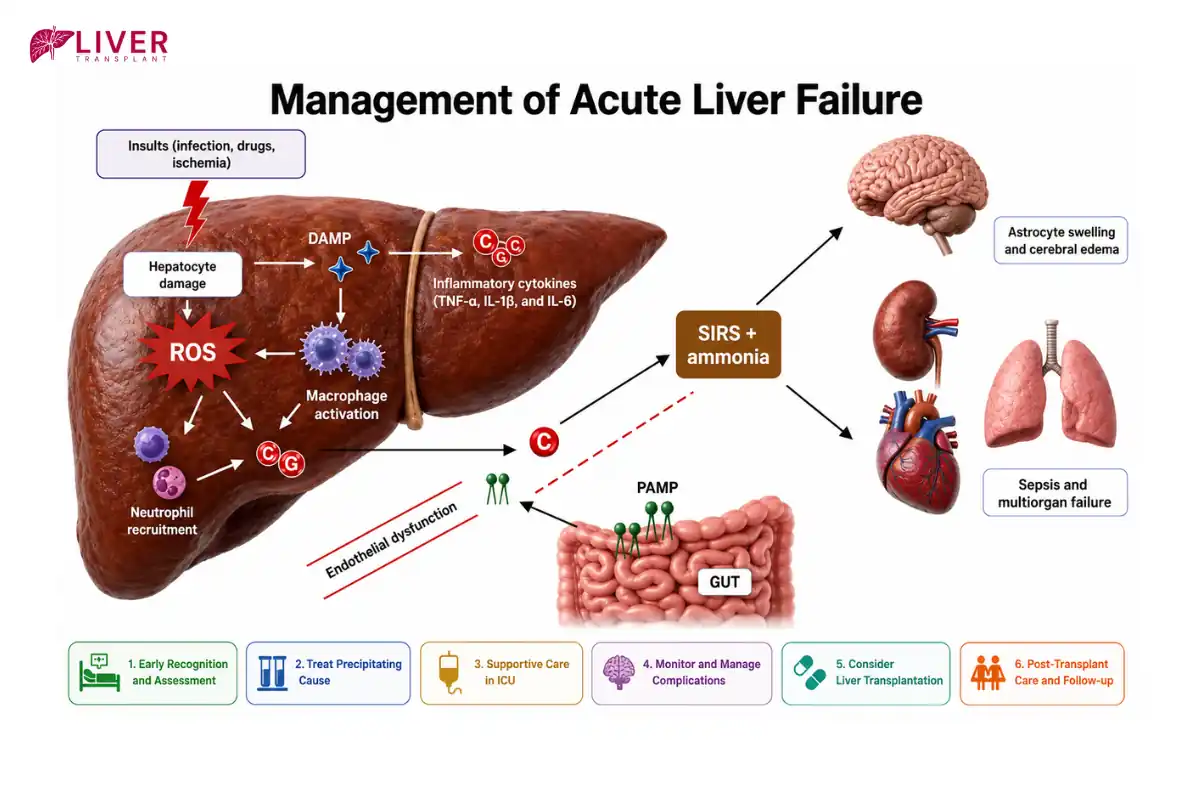
Acute liver failure is not a single-organ disease. It triggers a cascade of complications across multiple organ systems simultaneously each of which requires active management.

Cerebral oedema and raised intracranial pressure is one of the most life-threatening complications, particularly in patients with grade 3 and 4 encephalopathy. As ammonia and other toxins accumulate, brain cells swell. Intracranial pressure rises. If unchecked, it causes brain herniation fatal compression of the brainstem. Preventing and managing raised intracranial pressure is one of the most technically demanding aspects of acute liver failure management.

Acute kidney injury develops in 40 to 50 percent of patients with acute liver failure and significantly worsens prognosis. It results from a combination of reduced blood pressure, inflammatory mediators, and direct tubular toxicity. Renal replacement therapy is required in severe cases.

Severe coagulopathy creates a paradoxical situation the patient is simultaneously at risk of bleeding from impaired clotting and of thrombosis from disrupted anticoagulant protein production. Managing this balance requires careful clinical judgement and frequent laboratory monitoring.

Hypoglycaemia — severely low blood sugar can develop rapidly and without warning as glycogen stores in the failing liver are depleted and glucose production ceases. Untreated hypoglycaemia causes irreversible brain damage. Continuous glucose monitoring and maintenance infusions are mandatory.

Severe sepsis and multi-organ failure frequently complicate acute liver failure. Bacterial infections — particularly pneumonia, urinary tract infection, and line infections are common, and the immunosuppressed state of acute liver failure makes them rapidly life-threatening. Fungal infections are an additional risk in patients with prolonged critical illness.

Respiratory failure requiring mechanical ventilation develops in patients with severe encephalopathy both to protect the airway from aspiration and to assist breathing as the body's respiratory mechanics are affected by the systemic illness.

Cardiovascular instability — low blood pressure requiring vasopressor medications develops in severe cases as inflammatory mediators cause vasodilation and circulatory failure.

Metabolic acidosis — abnormal blood acidity from lactic acid accumulation and failing metabolic regulation is a serious complication that worsens prognosis and requires specific supportive interventions.

Can Acute Liver Failure Be Prevented?

Many cases of acute liver failure are preventable — and prevention requires both individual awareness and systemic action.

Safe paracetamol use is the most impactful individual-level prevention measure in Western countries where paracetamol overdose is the leading cause. Never exceeding the recommended maximum daily dose 4 grams (eight standard tablets) per 24 hours for adults is essential. Crucially, this maximum is lower for people who drink alcohol regularly, who are malnourished, or who are of low body weight these groups should use lower doses and seek medical advice. Checking all medications including cold remedies, combined analgesics, and prescription drugs for paracetamol content before taking additional paracetamol tablets prevents unintentional overdose, which is more common than many people realise.

Mental health support and suicide prevention are directly relevant to acute liver failure prevention, given the significant proportion of cases attributable to intentional paracetamol overdose. Access to mental health services, crisis support, and timely intervention for people in distress prevents many tragedies.

Hepatitis B vaccination prevents one of the significant viral causes of acute liver failure. Universal vaccination of newborns and catch-up vaccination of unvaccinated adults with risk factors has already measurably reduced viral acute liver failure rates in countries with comprehensive immunisation programmes.

Hepatitis B screening before immunosuppression is a critically important preventive measure. All patients about to receive chemotherapy, biological agents, or other immunosuppressive treatments should be screened for hepatitis B markers. Those with evidence of prior exposure should receive prophylactic antiviral treatment before and during immunosuppression to prevent reactivation hepatitis.

Responsible use of herbal supplements and traditional medicines requires greater awareness among both patients and healthcare providers. The hepatotoxic potential of many herbal products is significant and frequently underestimated. People should tell their doctors about every supplement they take, and should be cautious about products marketed without regulatory oversight.

Avoiding unnecessary medication combinations — checking with a pharmacist or doctor before combining prescription drugs, over-the-counter medicines, and supplements prevents drug-drug interactions that can unpredictably increase liver toxicity.

Regular liver monitoring during hepatotoxic drug therapy — for patients taking known liver-affecting medications like antituberculosis drugs, methotrexate, or amiodarone catches drug-induced liver injury at an early, treatable stage before acute liver failure develops.

Prompt medical attention for early symptoms is perhaps the most practically important prevention message of all. A person who develops jaundice, significant nausea, right upper abdominal pain, or confusion should seek medical assessment immediately not wait to see if it improves. The window between early symptoms and established acute liver failure can be remarkably short, and early presentation dramatically improves outcomes.

Conclusion

Acute liver failure is one of medicine's most serious emergencies a condition that can take a healthy person from mildly unwell to critically ill within days, and that demands rapid recognition, immediate specialist care, and often complex decision-making about liver transplantation. It is frightening, it is fast-moving, and its consequences without appropriate treatment are fatal.

But it is also a condition where medicine has made real, meaningful progress. Survival rates have improved substantially over recent decades, driven by better intensive care, the widespread availability of N-acetylcysteine, improved transplant outcomes, and better protocols for managing the cascade of complications that accompany liver failure. Many patients particularly those with paracetamol-induced failure who are treated promptly survive with complete liver recovery and no long-term consequences.

What determines the outcome, more than any other single factor, is time. Time from symptom onset to medical assessment. Time from assessment to diagnosis. Time from diagnosis to specialist care at a transplant centre. Time is the resource that acute liver failure consumes most rapidly and the one that, when preserved, gives the liver and the patient the best possible chance.

If you or someone you know develops the warning signs described in this guide jaundice, confusion, abdominal pain, unusual bruising, or any rapidly worsening combination of symptoms do not wait. Seek emergency medical care immediately. In acute liver failure, hours are not just hours. They are the margin between recovery and irreversible harm.

Frequently Asked Questions

The prognosis for acute liver failure depends on the cause, severity, and how quickly treatment begins. Some patients recover completely if the liver regenerates after the underlying cause is treated. Others may rapidly develop life-threatening complications such as brain swelling, bleeding, or multi-organ failure. In severe cases, emergency liver transplantation may be necessary. Early diagnosis greatly improves survival outcomes.

Acute liver failure often develops suddenly and may begin with fatigue, nausea, vomiting, abdominal pain, and jaundice. As the condition worsens, patients can develop confusion, personality changes, drowsiness, easy bruising, bleeding, swelling, and altered consciousness. These symptoms result from the liver’s inability to remove toxins and produce essential proteins. Immediate medical attention is required.

Acute liver failure is defined by the rapid onset of severe liver dysfunction, usually developing within days to weeks in someone without pre-existing liver disease. Symptoms can progress quickly, sometimes over just a few days. The exact duration varies depending on the cause and response to treatment. Some patients recover within weeks, while others require urgent liver transplantation.

No data was found
Understand acute liver failure symptoms, urgent treatment, and recovery strategies for better liver health and survival.

Conditions Treated

Comprehensive medical care for a wide range of conditions, focused on recovery, symptom management, and long-term wellness.

Read Next

Discover lifelong strategies, medications, monitoring, and healthy habits to maintain
Learn recovery steps, medications, nutrition, follow up care, and lifestyle
Get ready for liver transplant surgery with practical steps, nutrition,
Learn the differences, benefits, risks, and outcomes of living and
Explore liver transplant eligibility, evaluation criteria, and essential guidance to
Fatty liver disease develops due to excess fat buildup in