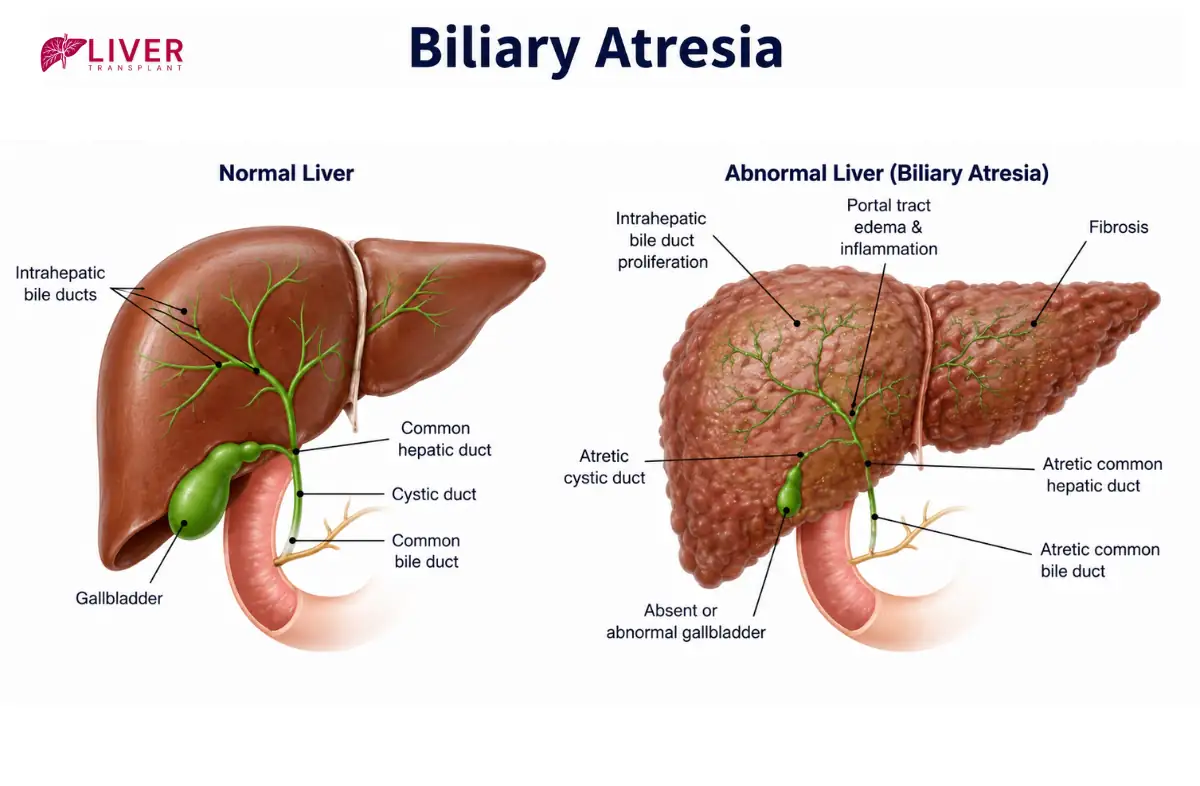
Treatment for biliary atresia is surgical there is no medication that can open blocked bile ducts or reverse the obliterative process. The goal of treatment is to restore bile flow from the liver to the intestine as quickly as possible, before irreversible liver damage accumulates.
The Kasai Procedure (Hepatoportoenterostomy)
The Kasai procedure named after the Japanese surgeon Morio Kasai who developed it in the 1950s is the primary surgical treatment for biliary atresia and the first intervention performed in virtually all affected infants.
The procedure works by removing the obstructed, scarred bile ducts and attaching a loop of the infant's own small intestine directly to the liver hilum the area of the liver where the bile ducts exit. This creates a new pathway for bile to drain from the liver directly into the intestine, bypassing the absent or obliterated duct system entirely.
The operation typically takes three to four hours and is performed under general anaesthesia. It requires a highly experienced paediatric surgical team with specific expertise in hepatobiliary surgery — outcomes are consistently better at high-volume specialist centres.
How well does the Kasai procedure work?
Success depends critically on age at surgery. Infants operated on before 45 days of age have the best outcomes approximately 80 percent achieve adequate bile drainage (defined as a bilirubin level below 20 μmol/L at three months post-operatively). Infants operated between 45 and 60 days have intermediate outcomes. Beyond 90 days, the procedure has significantly lower success rates, though it is still generally performed as it may extend the time before transplantation is needed and improve the child's nutritional status and growth.
Even when the Kasai procedure achieves good initial bile drainage, it does not cure biliary atresia. The underlying inflammatory process within the liver often continues, and many children who initially do well after Kasai gradually develop progressive fibrosis and eventually require liver transplantation. However, a successful Kasai can give a child years — sometimes a decade or more — of life before transplantation becomes necessary, which is enormously significant because older, larger children tolerate transplant surgery better and have access to a wider range of donor options.
Post-Kasai Medical Management
Surgery alone is not sufficient comprehensive medical management after the Kasai procedure is an essential component of pediatric biliary atresia treatment.
Prophylactic antibiotics are prescribed after surgery to reduce the risk of ascending cholangitis — bacterial infection travelling up the new biliary-intestinal connection into the liver, which is a common and serious complication.
Ursodeoxycholic acid a bile acid that promotes bile flow and has cytoprotective effects on liver cells is routinely prescribed post-operatively and continued long-term.
Fat-soluble vitamin supplementation (vitamins A, D, E, and K) is essential because impaired bile flow reduces fat absorption and depletes these critical nutrients. Vitamin K deficiency in particular raises bleeding risk significantly.
Nutritional support is a central priority. Infants with biliary atresia often have high caloric needs due to malabsorption and the metabolic demands of liver disease. Specialist dietitian input, high-calorie formula feeds, and in some cases nasogastric feeding are used to support adequate growth and development.
Treating Cholangitis
Ascending cholangitis fever, worsening jaundice, and deteriorating liver function following Kasai surgery is a serious complication requiring prompt hospitalisation and intravenous antibiotics. Repeated episodes of cholangitis damage the liver further and accelerate the need for transplantation.