Treatment of Hepatitis C has undergone a revolution that few areas of medicine can match. The introduction of direct-acting antiviral (DAA) drugs in the mid-2010s transformed a difficult, poorly tolerated, and often ineffective treatment into a short, well-tolerated, oral regimen that cures the vast majority of patients.
Direct-Acting Antiviral Drugs (DAAs)
DAAs work by targeting specific proteins the hepatitis C virus needs to replicate. There are three main classes, targeting different stages of the viral replication cycle.
NS3/4A protease inhibitors block the viral protease enzyme responsible for processing the hepatitis C polyprotein into functional components. Drugs in this class include grazoprevir, voxilaprevir, and glecaprevir.
NS5A inhibitors block the NS5A protein, which is essential for viral replication and assembly. Ledipasvir, velpatasvir, elbasvir, and pibrentasvir are the key drugs in this class.
NS5B polymerase inhibitors block the enzyme the virus uses to copy its RNA. Sofosbuvir is the most important drug in this class and has become the backbone of most treatment regimens.
Current First-Line Treatment Regimens
The most widely used treatment regimens are fixed-dose combination tablets that combine drugs from different classes to achieve maximum viral suppression.
Sofosbuvir/velpatasvir (Epclusa) is a pan-genotypic regimen — effective against all HCV genotypes — given as one tablet daily for 12 weeks. It achieves sustained virological response rates (the definition of cure) of 95 to 99 percent across genotypes in patients without cirrhosis.
Glecaprevir/pibrentasvir (Maviret) is another pan-genotypic combination given as three tablets daily. Its key advantage is an eight-week treatment duration for treatment-naive patients without cirrhosis — one of the shortest available courses. It achieves cure rates of 97 to 99 percent in this population.
Sofosbuvir/ledipasvir (Harvoni) is used primarily for genotype 1 infection and remains widely available, with cure rates exceeding 95 percent.
Treatment duration depends on the regimen chosen, the patient's prior treatment history, the presence or absence of cirrhosis, and the genotype. Most patients are treated for 8 to 12 weeks. Patients with decompensated cirrhosis or prior treatment failure may require 16 to 24 weeks and additional drugs.
Sustained Virological Response (SVR)
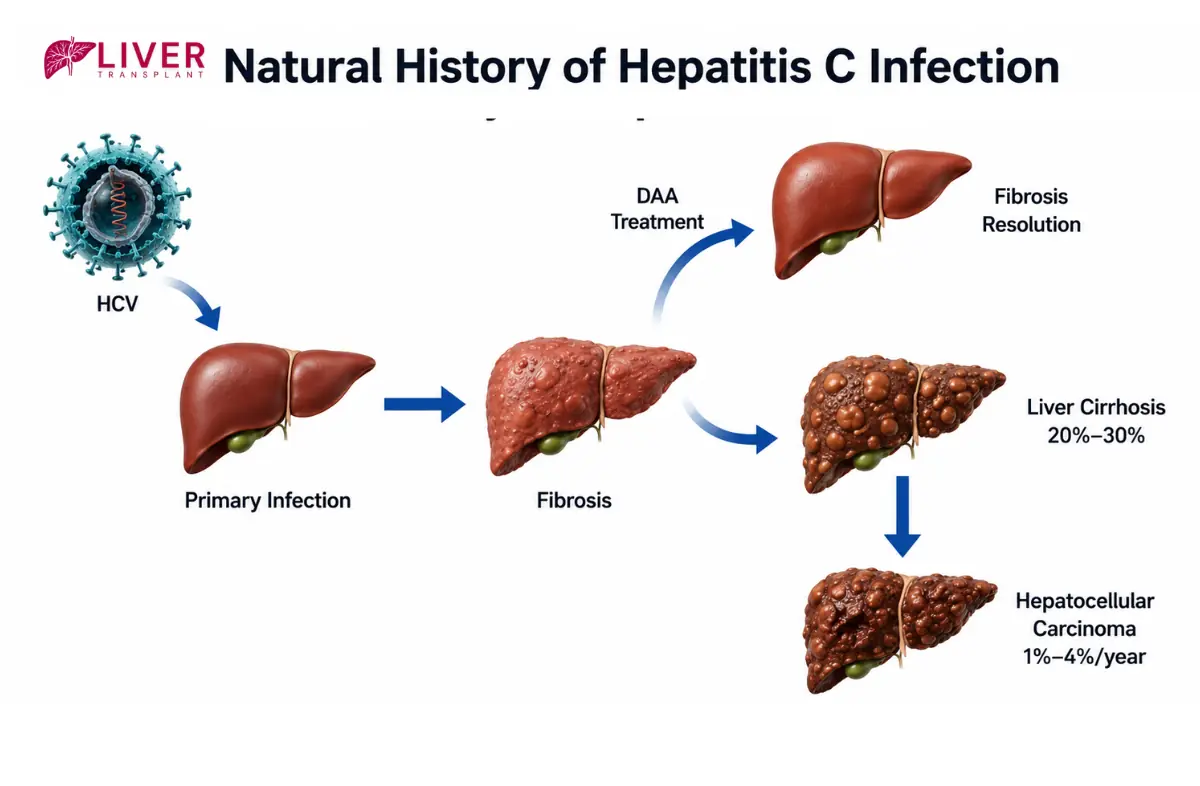
The goal of Hepatitis C treatment is sustained virological response — defined as undetectable HCV RNA in the blood 12 weeks after completing treatment. SVR is considered a functional cure. The virus does not reappear after SVR is achieved — patients who achieve it are considered permanently cured of hepatitis C. SVR is associated with regression of liver fibrosis, dramatically reduced risk of cirrhosis and liver cancer, resolution of many extrahepatic manifestations, and improved quality of life.
Treatment of Hepatitis C in special populations requires particular consideration. Patients with decompensated cirrhosis are generally treated with interferon-free, ribavirin-free regimens and may need sofosbuvir/velpatasvir with ribavirin for 12 weeks. Patients co-infected with HIV can be treated with the same DAA regimens, with attention to drug-drug interactions with antiretroviral therapy. Patients with kidney disease, including those on haemodialysis, can now be treated safely with glecaprevir/pibrentasvir, which does not require dose adjustment for renal impairment.
Monitoring During Treatment
HCV RNA is tested at baseline, at treatment completion, and 12 weeks after completion to confirm SVR. Liver function tests are monitored periodically. Drug interactions — particularly with acid-suppressing medications, statins, and certain cardiac drugs — are reviewed carefully before treatment initiation and managed where necessary.